I spent six years in IT support watching people buy $1,500 standing desks only to use them as expensive platforms for their coffee mugs. There is this massive, exhausting industry built around “optimizing” your body with expensive gadgets and biohacking subscriptions that promise to fix your posture if you just buy one more piece of hardware. But here is the truth: you don’t need a smart desk that pings your phone like an annoying coworker. If you actually want to learn how to build movement into a desk day, you don’t need a new setup; you just need to stop treating your chair like a permanent fixture.
I’m not going to sell you on a complicated routine that requires more willpower than you have left by 2:00 PM. Instead, I want to talk about the small, slightly boring things that actually work—the kind of stuff that doesn’t require a monthly fee or a gym membership. I’ll show you how to weave tiny bits of motion into your existing workflow so your back doesn’t feel like it’s made of glass by Friday. No hype, no fancy gear, just practical ways to move without breaking your focus.
Table of Contents
Micro Movements for Office Workers That Actually Work

Most of the advice you see online about “desk yoga” involves twisting yourself into a pretzel while your boss watches. That isn’t happening. Instead, I focus on micro-movements for office workers that don’t require a change of clothes or a yoga mat. The goal is to break the static hold your muscles get into when you’ve been staring at a spreadsheet for three hours. Start with simple shoulder rolls and neck tilts. It sounds basic, but if you’re constantly hunching toward your monitor, these tiny resets are what keep your neck from feeling like it’s made of rusted iron by 4:00 PM.
Another thing that works—and requires zero extra time—is focusing on improving posture at work through small, intentional shifts. Every time you finish a task or hit “send” on a long email, use that as a trigger to squeeze your shoulder blades together or do a seated calf raise. These are low-impact office exercises that don’t disrupt your flow. You aren’t trying to run a marathon; you’re just trying to convince your body that it isn’t actually a permanent fixture of your ergonomic workstation setup.
Combatting Sedentary Lifestyle Without Buying Fancy Gear
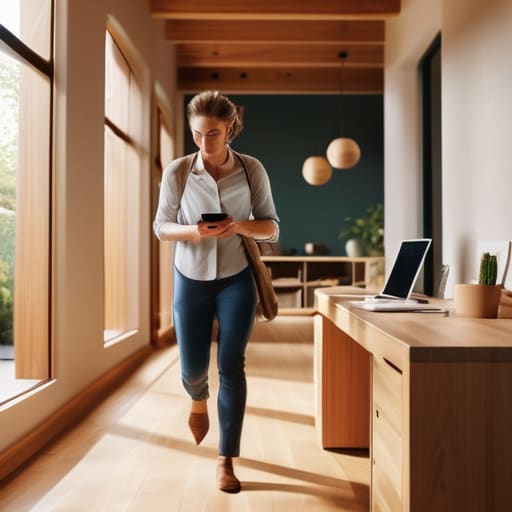
You do not need a $1,000 standing desk or a subscription to a wellness app that pings you every twenty minutes to remind you that you’re sitting down. Most of that gear is just expensive clutter that ends up becoming a very high-end place to hang your coat. Combatting sedentary lifestyle is less about the equipment you own and more about the friction you remove from your existing environment. If your printer is in the next room, walk there. If you can take a call on your mobile, do it while pacing the hallway.
I spent years watching people try to fix their physical discomfort by buying more things, but usually, the issue was just a lack of variety in how they held their bodies. Instead of a complex ergonomic workstation setup, try simply moving your water glass to the far side of the desk so you have to reach for it, or standing up every time you hit “send” on a long email. These tiny, low-effort adjustments prevent that specific kind of stiffness that makes you feel twenty years older than you actually are.
Five ways to move without making a scene
- Use the ‘water bottle rule.’ Instead of a massive 2-litre jug that sits on your desk all day, use a smaller glass. It forces you to walk to the kitchen or the water cooler more often. It’s a low-tech way to get steps in without needing a smartwatch to nag you.
- Stop using the ‘shortcut’ for everything. If you need to print a document or grab a stapler, don’t use the one right next to your keyboard. Walk to the communal printer or the supply cupboard. It sounds silly, but those thirty-second trips add up by 5:00 PM.
- Set a ‘stand-up’ trigger for your meetings. If you’re on a call where you don’t actually need to share your screen or type, stand up. You can pace the room or just shift your weight. It keeps you from sinking into that chair-shaped dent in your spine.
- Use your phone as a timer, not just a distraction. Set a gentle alarm for every hour. When it goes off, don’t look at your notifications; just do three slow neck rolls and a standing stretch. It takes ten seconds and keeps your shoulders from creeping up toward your ears.
- Change your scenery for deep work. If you have a laptop, move from your desk to a kitchen table or even a different chair for twenty minutes. The physical act of relocating helps break the mental fog that comes from staring at the same four walls all day.
The short version
You don’t need a standing desk or a $300 ergonomic chair to stop feeling stiff; you just need to move your joints every hour so they don’t seize up.
Forget the complicated “biohacking” routines; if you can walk to the kitchen for a glass of water or stretch your calves while a file downloads, you’re doing enough.
Movement is about consistency, not intensity. It’s better to do thirty seconds of movement ten times a day than to attempt a grueling hour-long workout once a week and spend the rest of the time glued to your seat.
On the myth of the perfect setup
You don’t need a three-thousand-euro standing desk or a subscription to a guided stretching app that pings you every twenty minutes; you just need to remember that your body wasn’t designed to be a permanent fixture of your office chair.
Saoirse Doyle
The takeaway
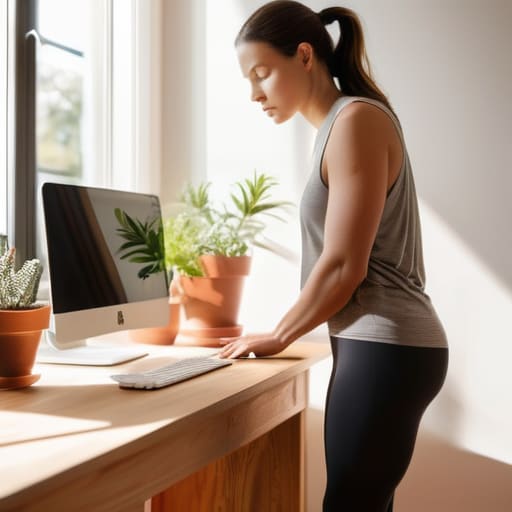
At the end of the day, you don’t need a $1,500 standing desk or a subscription to a guided stretching app that will just end up as another monthly charge on your bank statement. We’ve looked at how small, unremarkable shifts—like standing up while you wait for a file to upload or doing a few calf raises during a meeting where you aren’t the one talking—can stop your body from feeling like a rusted hinge by 5:00 PM. The goal isn’t to turn your home office into a gym; it’s just to ensure that your workspace doesn’t become a place where your physical health goes to die. Stick to the low-friction habits we discussed, because if a movement routine is too complicated to do when you’re tired, you simply won’t do it.
I spent years watching people try to “optimize” their lives with complex setups that they eventually abandoned because they were too much work to maintain. My advice is to keep it boring and keep it simple. If you can manage to walk to the kitchen for a glass of water instead of just reaching for the bottle on your desk, you’ve already won. Productivity isn’t about squeezing every last drop of efficiency out of your brain; it’s about making sure your physical self is still functional enough to enjoy your life once you finally close the laptop. Just move a little, more often, and don’t overthink it.
Frequently Asked Questions
How do I actually remember to do these movements when I'm deep in a flow state or a back-to-back meeting schedule?
The truth is, you won’t. If you’re actually in flow, you’ll ignore every notification you set. Don’t fight your brain; work around it. Use “anchor habits” instead. If a meeting ends, that’s your cue to stand up before the next one joins. If you finish a task, walk to the kitchen for water. It’s not about a fancy app; it’s about tying movement to things you’re already doing.
Will these little movement breaks actually mess with my focus or make me feel more scattered during work?
Honestly, it’s usually the opposite. If you’re staring at a spreadsheet until your eyes glaze over, you aren’t actually “focusing”—you’re just stuck. I used to see people burn out because they thought sitting still was the same as working. A quick stretch or a walk to the kettle acts like a hard reset for your brain. The trick is to keep it short; if you start scrolling through news feeds, that’s when the focus dies.
What happens if I work in a cramped office or a shared space where I can't exactly start stretching out?
If you’re stuck in a cubicle or a shared office, the last thing you want is to be the person doing yoga next to the water cooler. It’s awkward and, frankly, a bit much. Instead, focus on “invisible” movement. Roll your ankles under the desk, squeeze your shoulder blades together while reading an email, or do seated calf raises. It looks like you’re just thinking, but you’re actually preventing your legs from turning into lead.
