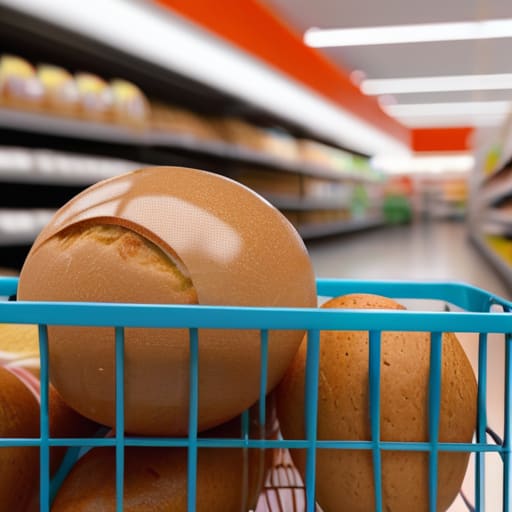
I was standing in the grocery aisle last Tuesday, staring at a bag of flour that had jumped fifty cents since my last bake, and I realized that most of the “expert” explanations for this are complete nonsense. If you search for what is inflation, you’ll mostly find economists using ten-dollar words to describe why your paycheck feels like it’s shrinking while your bills are growing. They’ll talk about “monetary aggregates” and “consumer price indices” like they’re doing you a favor, but they’re usually just obfuscating the fact that your money is losing its actual muscle. It’s not a complex mathematical mystery; it’s just the reason your life feels more expensive even when you aren’t doing anything differently.
I’m not here to give you a lecture on macroeconomics or sell you on some “inflation-proof” crypto scheme that’s actually just a way to lose your shirt. Instead, I want to strip away the jargon and look at the practical reality of how this affects your digital subscriptions, your grocery list, and your savings. I’ll explain the mechanics of it simply, tell you what to actually watch out for, and help you understand why doing nothing is often the most expensive mistake you can make.
Table of Contents
Purchasing Power Explained Why Your Tenner Feels Like a Fiver

To understand why your tenner feels like a fiver, you have to look at purchasing power explained in the simplest terms possible: it’s the actual amount of “stuff” your money can grab before it disappears. Think of it like a digital storage limit on a cloud service. If your subscription price goes up but your storage capacity stays the same, you’re effectively getting less value for every pound you spend. Inflation works the same way. The physical note in your wallet hasn’t changed, but the volume of goods it can actually command has shrunk.
Economists track this using the consumer price index (CPI), which is essentially a giant, never-ending shopping list of things regular people buy—from milk and electricity to data plans. When that index ticks upward, it means the cost of maintaining your baseline lifestyle is climbing. It isn’t just a statistic; it’s the reason you find yourself standing in the supermarket aisle, staring at a loaf of bread, and wondering when exactly the math stopped working in your favour.
The Cpi Math How They Track Your Rising Grocery Bills

The way the government actually measures this is through something called the consumer price index (CPI). Think of it as a massive, invisible shopping basket that gets updated constantly. They don’t just look at one thing; they track thousands of items—everything from the price of a liter of milk to the cost of a haircut or a new pair of trainers. Every month, they compare the total cost of that basket to what it cost the month before. If the total goes up, that’s your inflation number.
It isn’t always a perfect reflection of your actual life, though. The math can be a bit fiddly because they use something called “weighting.” For example, if the price of avocados spikes but the price of electricity drops significantly, the index might show that prices are stable, even if you’re feeling the pinch at the checkout. It’s a statistical average, not a personal receipt. Understanding this helps you see why the official news might say inflation is cooling down while your weekly grocery shop still feels like a minor financial crisis.
How to stop inflation from eating your lunch
- Watch your subscriptions. When inflation hits, companies don’t just raise prices; they “adjust” your monthly rate. Check your bank statements for those creeping £1 or £2 increases—they seem small, but they’re the quietest way your money disappears.
- Avoid the “lifestyle creep” trap. As prices rise, it’s tempting to move your money around to keep up, but try to keep your fixed costs as low as possible. If you can lock in a fixed-rate utility or a long-term contract now, do it before the next price hike.
- Don’t let your cash rot in a zero-interest current account. If your money is just sitting there while inflation is at 4%, you are effectively paying the bank to hold your money. At the very least, find a high-yield savings account that actually moves with the market.
- Buy in bulk, but only the stuff that doesn’t expire. If you see the price of your specific brand of pasta or laundry detergent spiking, grab a few extra units now. It’s a small hedge against the next price jump, provided you don’t end up with a pantry full of stuff you won’t actually use.
- Understand the “real” value of your raises. If your boss gives you a 3% raise but inflation is at 5%, you didn’t actually get a raise—you just got a slightly slower pay cut. Always look at the net difference between your income growth and the cost of living.
The short version: what you actually need to know
Inflation isn’t just a number on the news; it’s the literal gap between what your money used to buy and what it buys now, effectively acting like a hidden tax on your bank balance.
The way the government tracks it (the CPI) is a useful guide, but it’s an average—meaning your specific reality might feel much worse if your biggest costs are rent and energy rather than a basket of generic goods.
You can’t “fix” inflation, but you can stop it from quietly eating your savings by making sure your money is actually working somewhere other than a zero-interest checking account.
The real definition of inflation
“Inflation isn’t some abstract economic theory you need a PhD to understand; it’s just the quiet way your bank balance loses its muscle over time, making the same life you lived last year feel significantly more expensive today.”
Saoirse Doyle
The bottom line

At the end of the day, inflation isn’t some mysterious force designed to ruin your weekend; it’s just the math of how much your money can actually do. We’ve looked at how your purchasing power shrinks, how the CPI attempts to track that creeping cost in your shopping trolley, and why a tenner doesn’t go nearly as far as it did when I started my first IT job. It’s easy to feel like you’re losing a game you never signed up to play, but understanding that inflation is a constant variable helps take the sting out of the surprise. You can’t stop the numbers from moving, but you can stop being blindsided when your monthly budget suddenly feels tight.
My advice is to stop waiting for things to “go back to normal,” because the economy rarely works that way. Instead, focus on the small, boring things that actually give you some ground to stand on—like keeping an eye on those creeping subscription costs or making sure your savings aren’t just sitting idle while prices climb. You don’t need a PhD in economics to navigate this; you just need to build a life that is resilient to the fluctuations. Take it one step at a time, keep your overheads low, and remember that being aware of the problem is half the battle won.
Frequently Asked Questions
If prices are going up, why does it feel like my wages aren't even keeping pace?
It’s because of a lag between the cost of living and the rhythm of paychecks. Prices for things like milk or electricity tend to jump immediately, but wages usually only move during annual reviews or when you switch jobs. If your rent goes up by 10% in January but your boss doesn’t look at your salary until December, you’ve effectively taken a massive pay cut for eleven months. It’s a gap that eats your savings alive.
Is there a way to actually protect my savings so they don't just evaporate over time?
The short answer is: you can’t “beat” it entirely, but you can stop the bleeding. Most people leave money in a standard current account, which is basically just letting it evaporate. You need to look at high-yield savings accounts or index funds—things that actually grow. Just a warning: with any investment, there’s a risk you could lose money if the market dips. If you go the subscription route for any financial app, check the exit terms first.
At what point does inflation stop being a "nuisance" and start becoming a genuine crisis?
It stops being a nuisance the moment you can no longer plan for next month. A little price creep is annoying, but a crisis hits when your “buffer”—that bit of savings you keep for a broken boiler or a car repair—is being eaten alive by the cost of milk and petrol. When you stop choosing between a better brand and a cheaper one, and start choosing between groceries and utilities, that’s when the system is actually breaking.
