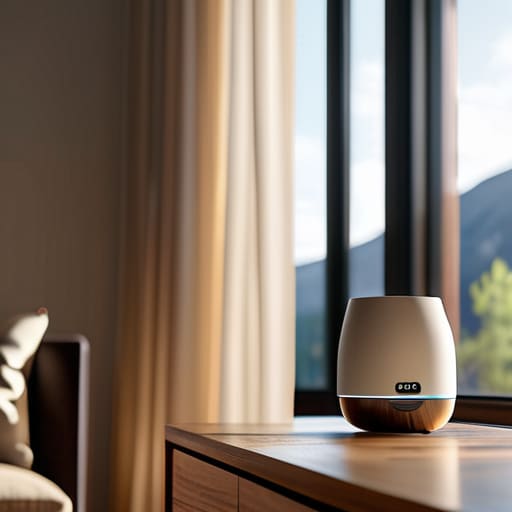
I spent six years on a helpdesk listening to people explain why they needed a $300 smart fridge that tells them when they’re low on milk, and frankly, it’s exhausting. Most “productivity gurus” will try to sell you a vision of a frictionless life where your house anticipates your every move, but they rarely mention that you’ll spend your Saturday morning resetting a hub because of a firmware update. We need to stop pretending that every gadget is a solution; instead, we should be looking at how smart home devices improve daily efficiency without turning your living room into a troubleshooting manual.
If you’re starting to build out this kind of setup, my biggest piece of advice is to check the local connectivity before you buy anything. There is nothing more frustrating than setting up a beautiful automation sequence only to realize your router can’t handle the extra traffic, or worse, that the device requires a constant cloud connection to do even the simplest tasks. I usually tell people to look for devices that support Matter or Zigbee so they aren’t completely beholden to a single manufacturer’s ecosystem. It’s also worth doing a quick bit of research on local service availability or even looking into ts escort norwich if you find you need specific local help or connections to get your home life sorted while you’re busy tinkering with your new tech.
I’m not here to show you a polished showroom or tell you which expensive ecosystem to join. My goal is to give you the unvarnished truth about what actually saves time and what just creates more digital clutter. I’ll walk you through the setup, the inevitable points of failure, and—most importantly—what happens to your “automated” life the moment you decide to cancel that monthly subscription. This is about making your home work for you, rather than you working for your home.
Automating Household Routines What Actually Saves Time

Most people think automating household routines means having a robot vacuum that dances around the rug, but the real wins are much more boring. For me, it’s about the things you stop thinking about entirely. I set my smart plugs to kill the power to my coffee machine and my desk lamp at exactly 11:00 PM every night. It’s not about “innovation”; it’s about optimizing home workflow with technology so I don’t have to do a mental sweep of the house before bed. If you can offload even three small, repetitive tasks to a timer, you’ve reclaimed a tiny bit of mental bandwidth.
The catch, as always, is the setup. You’ll see a lot of hype around voice assistant productivity hacks, but if your Wi-Fi is patchy, you’ll spend more time shouting “Alexa, turn on the kitchen light” than you would have spent just walking ten feet. I only rely on devices that work locally or have a physical override. If your entire morning routine depends on a cloud server being online, you haven’t built a system; you’ve built a single point of failure.
Iot Devices for Time Saving the Stuff That Works
If you want to talk about IoT devices for time saving, we need to move past the novelty of changing light colors with your phone. The real wins come from the things you eventually forget are even there. For me, that’s the smart plug on the coffee maker or the sensor that tells the vacuum to start once the last person has left the house. When you focus on optimizing home workflow with technology, you aren’t looking for gadgets; you’re looking for ways to eliminate the “micro-tasks” that clutter your brain.
However, there is a catch. Most of these wins depend entirely on your smart home ecosystem integration. If your lightbulbs talk to one app and your motion sensors talk to another, you haven’t saved any time; you’ve just added a digital layer of chores. I’ve spent too many afternoons troubleshooting why a “smart” routine failed because a firmware update decided to break a bridge. If you’re going to do this, pick one ecosystem and stick to it. It’s better to have three devices that actually work together than ten that require a manual reset every Tuesday.
Five things to check before you automate your life
- Buy for local control, not the cloud. If your internet goes down or the manufacturer decides to stop supporting your smart plug, you don’t want your entire morning routine to die with it. Look for devices that work with Matter or Zigbee so they can keep functioning even if the company’s servers do.
- Audit the subscription creep. Before you buy a smart camera or a security system, check if the “smart” features—like person detection or cloud storage—are locked behind a monthly fee. If you stop paying, make sure the hardware doesn’t just become an expensive, non-functional paperweight.
- Start with the “high-friction” tasks. Don’t bother automating your bookshelf or your toaster. Focus on the things you do every single day that feel like a chore, like turning off every light in the house before bed or adjusting the thermostat when you leave. If it doesn’t solve a repetitive annoyance, it’s just a gadget.
- Beware of “App Fatigue.” If a device requires its own standalone app to do anything, it’s going to clutter your phone and your brain. Try to stick to devices that integrate into one single ecosystem (like Apple Home, Google Home, or Alexa) so you aren’t hunting through five different menus just to dim the lights.
- Plan for the “manual fallback.” Every automation you set up should have a physical backup. If your smart lock fails or your voice assistant doesn’t understand your accent, you still need to be able to get into your house or turn on the lights without needing a degree in computer science.
The Bottom Line
At the end of the day, smart home tech isn’t about living in a sci-fi movie; it’s about removing the tiny, repetitive frictions that drain your mental energy. We’ve looked at how automated lighting and smart scheduling can actually buy you back a few minutes of peace, provided you choose devices that don’t require a monthly fee just to turn a bulb on. Stick to the basics—the things that automate a task you hate doing every single morning—and avoid the shiny gadgets that promise “intelligence” but really just offer more notifications. If a device adds more troubleshooting to your weekend than it saves in your daily routine, it isn’t a tool, it’s a chore.
My advice is to build your setup slowly and with a healthy dose of skepticism. You don’t need a fully integrated ecosystem by next Tuesday to see a benefit. Start with one thing that actually solves a problem in your house, see how it holds up when the Wi-Fi hiccups, and only then move to the next. The goal isn’t to have the most sophisticated home on the block; it’s to have a home that stays out of your way so you can focus on the things that actually matter, like finally getting that sourdough starter to behave.
